UniCredit Art Collection company logo
UniCredit Art Collection
Skip to main content
  • Menu
  • Artists
  • Collections
  • Video
  • Exhibitions
  • Learning Centre
  • Our Places
  • News
  • UniCredit Art Collection
  • EN
  • IT
  • DE
Menu
  • EN
  • IT
  • DE

Jewels

Jewels

  • Collections
  • Jewels
  • Between Idealization and Individuality
  • Maps
Open a larger version of the following image in a popup: Jewels
  • Ornaments, symbols of power, magical objects, amulets with protective abilities: jewelry, and the many nuances of its meanings, guide us through a narrative capable of evoking wonder, curiosity, and admiration, also through the lens of art history.

  • The most immediate meaning we attribute to an ornament—be it a jewel or a precious object—is that of symbolizing status,...
    The most immediate meaning we attribute to an ornament—be it a jewel or a precious object—is that of symbolizing status, whether economic or social.
     
    An example is Giovanni Baglione’s artwork, La testa del Battista presentata ad Erode (1600–1610), in which the dancer Salome and a maidservant of King Herod’s court present him with the severed head of Saint John the Baptist. Both women wear several ornaments: a golden crown, pearl earrings and necklaces, brooches, and even an exquisite gemstone‑inlaid bracelet, all unmistakably emphasizing their high social standing.
     
    Indeed, Salome, being the niece of King Herod and therefore a princess of Judea, wears a golden crown identical to the one worn by her uncle behind her. Her bodice is adorned with onyx stones, traditionally associated with strength and balance. Onyx also appears in the jeweled headband worn by the maidservant, likely another noblewoman. Their richness immediately distances them, in all its complexity, from the macabre sight of the Baptist’s decapitated head.
  • A similar decorative device is used by Luca Giordano in the large canvas La cena del ricco Epulone (1663), where...

    A similar decorative device is used by Luca Giordano in the large canvas La cena del ricco Epulone  (1663), where the woman seated at the table with the wealthy Epulone gazes indifferently at the starving beggar at their feet. She wears not only an elaborate gown made of iridescent fabric, but also several strands of pearls around her neck and in her hair, further separating her from the scene of poverty before her. Pearls—their symbolism and meaning discussed further on—appear frequently in the history of art and literature, with references dating back to the Old Testament and the Vedas of the Brahmins, sacred texts of Hinduism.

  • Status is less relevant than role in Agostino Carracci’s Giuditta con la testa di Oloferne (c. 1580), where Judith does...
    Status is less relevant than role in Agostino Carracci’s Giuditta con la testa di Oloferne (c. 1580), where Judith does not wear the jewels typical of a noblewoman, but rather a buckle and a belt reminiscent of sixteenth‑century armor, symbolizing her role as a soldier fighting for her cause.
    The type of gem or stone depicted may also carry symbolic meaning: the ruby, with its intense color, represents love, passion, and vitality, while the emerald symbolizes hope and spiritual growth.
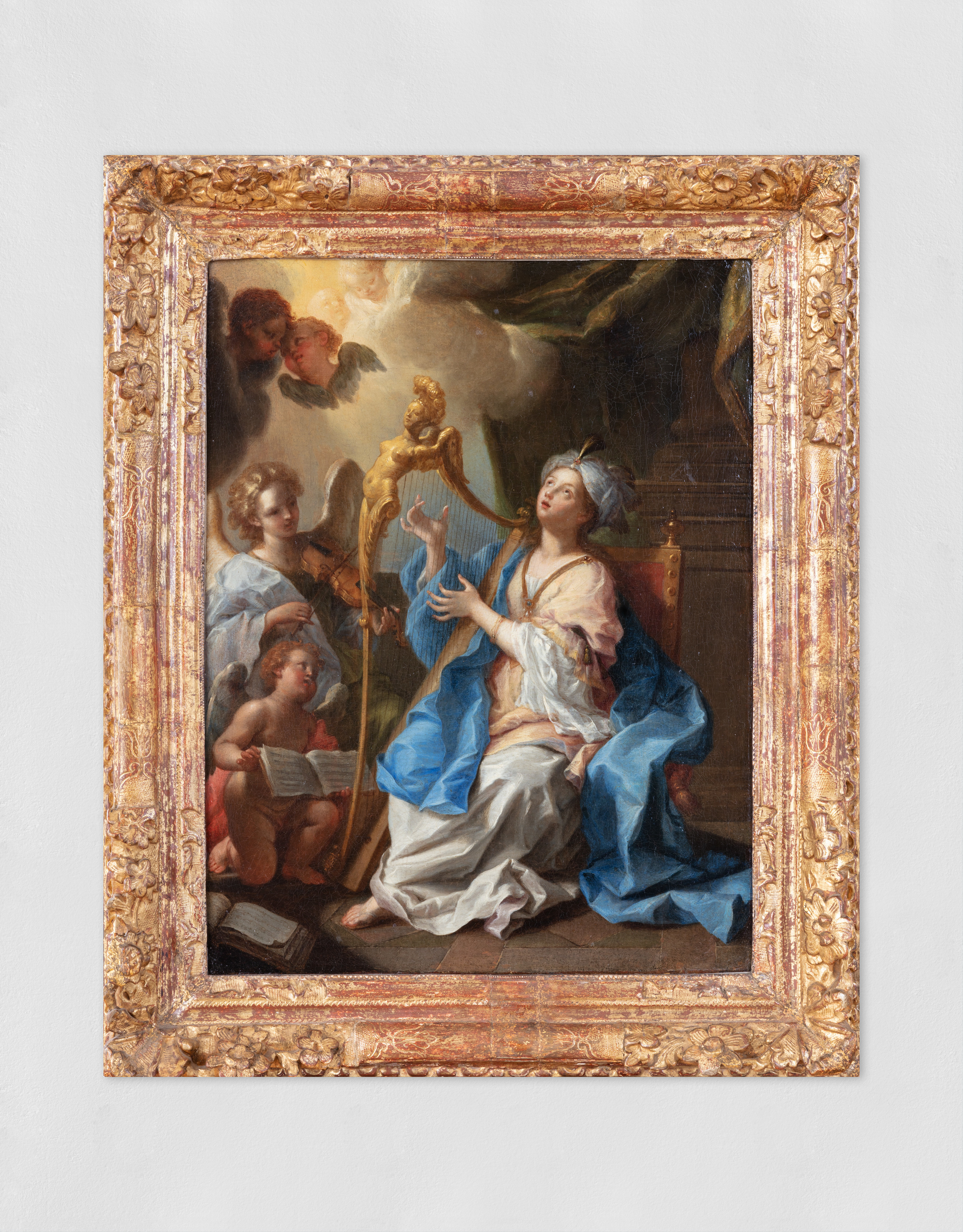
  • Sebastiano Conca (attributed)
    Santa Cecilia, c.1700-50
    Oil on canvas / Olio su tela / Öl auf Leinwand
    18 7/8 x 15 in
    48 x 38 cm
  • One of the most frequently used jewels in art history is undoubtedly the pearl, especially in religious representations as a...
    Luca Giordano (attributed)
    Giovane donna, c.1650-1700
    Oil on canvas / Olio su tela / Öl auf Leinwand
    34 5/8 x 23 in
    88 x 58.5 cm

    One of the most frequently used jewels in art history is undoubtedly the pearl, especially in religious representations as a symbol of purity, innocence, and simplicity. This is seen in Sebastiano Conca’s painting in which Saint Cecilia is adorned with pearl‑decorated brooches, and in Giovane Donna by Luca Giordano (c. 1650), where the artist emphasizes the youth and purity of the sitter by portraying her with a single, simple pearl earring.

    From a figurative standpoint, various artists—even those active in similar periods—adapt the depiction of precious objects and jewelry in their works to their personal style.

    We can observe, for example, the rapid brushwork used for ornaments in the paintings of Giuseppe Maria Crespi, known as “Lo Spagnuolo.” In The Due Pastorelle, one of the young women wears a necklace of red beads contrasting with the rest of her clothing; and in the Adorazione dei Magi (1690), in which the Magi offer their gifts to Mary and the infant Jesus, these adornments are rendered almost sketchily, without detailed description, yet perfectly capturing the reflected light that makes them stand out vividly.

    • Painting depicting two shepherdesses sitting on a meadow, intent on stroking two baby goats. In the background of the painting is a third female figure with a jug on her head.
      Giuseppe Maria Crespi, known as lo Spagnuolo, and Bottega, Due pastorelle
    • Painting depicting the adoration of the Magi
      Giuseppe Maria Crespi, known as lo Spagnuolo, and Bottega, Adorazione dei Magi, 1690
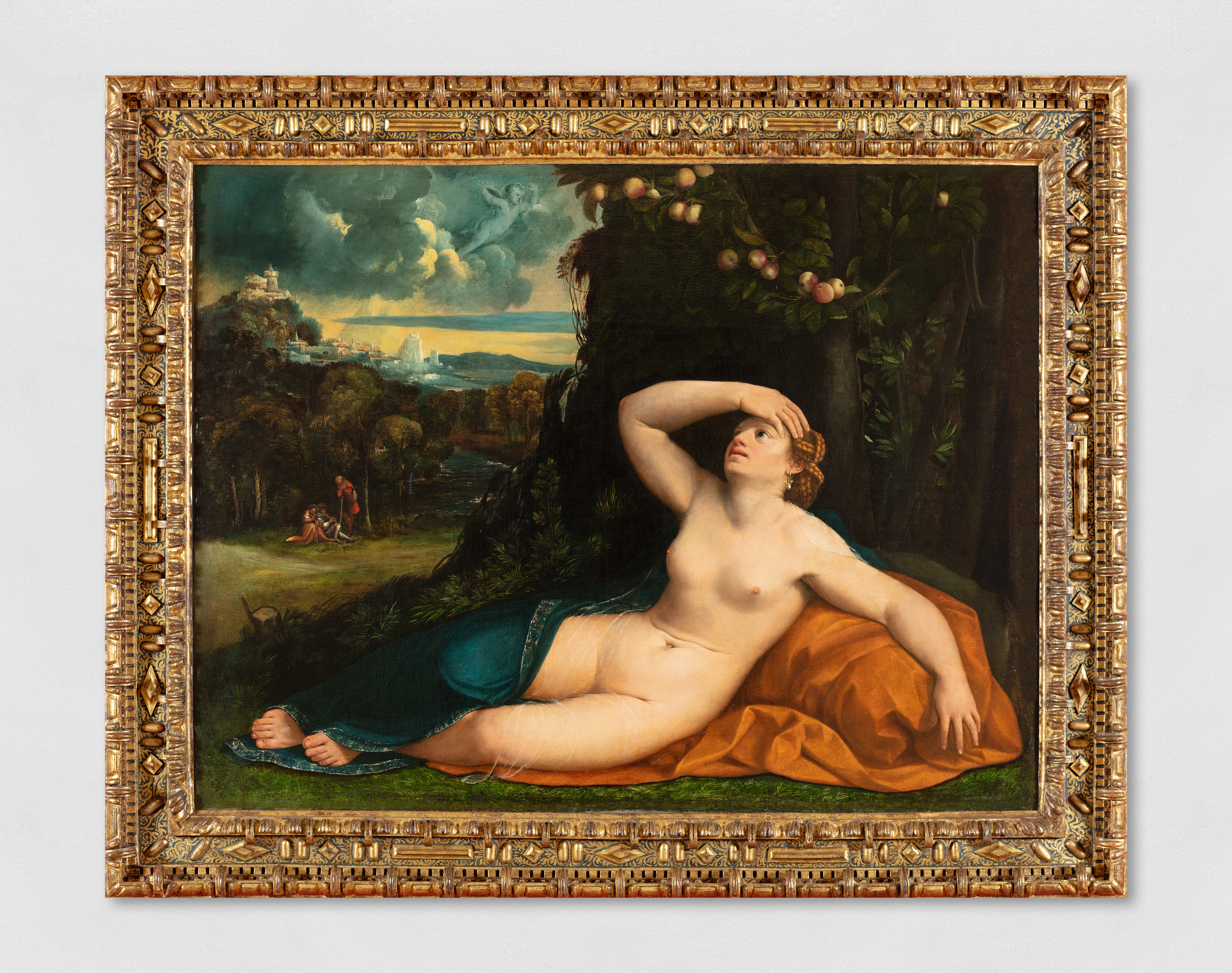
  • Giovanni Luteri, known as Dosso Dossi, Il risveglio di Venere, 1520 circa
    Artworks

    Giovanni Luteri, known as Dosso Dossi

    Il risveglio di Venere, 1520 circa
    Oil on canvas / Olio su tela / Öl auf Leinwand
    46 1/2 x 61 in
    118 x 155,5 cm
  • On the other hand, in other almost contemporary works we find a rendering of ornaments that we might now define as nearly photographic, offering an astonishing level of detail in the earrings and brooches worn by the protagonists. For instance, in Giovanni de Luteri’s Il Risveglio di Venere, known as Dosso Dossi, the single inlaid earring worn by Venus, along with her intricate braided hairstyle, provides a sharp image of the fashions of the time. The Venus in the painting is thought to represent Laura Dianti, the mistress of Alfonso I, Duke of Ferrara—an interpretation seemingly supported by the presence of a laurel branch, an explicit reference to her name, in keeping with the painting’s amorous theme.
     
    Similarly, in Giovanni Francesco Barbieri’s Lucrezia, known as Guercino, we again find the motif of the earring, which reflects the light illuminating the young woman’s face, as well as a hairpin just visible in her hairstyle.
    Hair ornaments were indeed very common at the time, as can be seen even more clearly in Giacomo Gimignani’s Venus with Adonis and Cupid, where Venus’s head is decorated with pearls and white ribbons.
    • Painting of the face of a woman with long wavy blond hair.
      Giovanni Francesco Barbieri, known as Guercino, Lucrezia, XVII Sec., metà
    • Classical painting with two adults and a child, faces obscured, octagonal golden frame.
      Giacinto Gimignani (attribuito a), Venere con Adone e Cupido
  • Precious stones, gold, and pearls were therefore far more than simple ornaments: especially in eras when they were rare and difficult to obtain, they became essential narrative tools, capable of communicating wealth, social role, and spiritual values, leaving in paintings a symbolic trace that still speaks to us today.

UniCredit Art Collection Logo.

  • UniCredit Art Collection
  • UniCredit Website

Terms of Use


For referrals, loan requests and other projects                                                                                                   

WRITE TO US

Instagram, opens in a new tab.
LinkedIn, opens in a new tab.
Youtube, opens in a new tab.
Twitter-x, opens in a new tab.
Privacy Policy
Accessibility policy
Cookie Policy
Manage cookies
Copyright © 2026 UniCredit Art Collection

This website uses cookies
This site uses cookies to help make it more useful to you. Find out more about cookies.

Manage cookies
Accept

Cookie preferences

Check the boxes for the cookie categories you allow our site to use

Cookie options
Required for the website to function and cannot be disabled.
Improve your experience on the website by storing choices you make about how it should function.
Allow us to collect anonymous usage data in order to improve the experience on our website.
Allow us to identify our visitors so that we can offer personalised, targeted marketing.
Save preferences
Close

Join our mailing list

Signup

* denotes required fields

In order to respond to your enquiry, we will process the personal data you have supplied in accordance with our privacy policy.