UniCredit Art Collection company logo
UniCredit Art Collection
Skip to main content
  • Menu
  • Artists
  • Collections
  • Video
  • Exhibitions
  • Learning Centre
  • Our Places
  • News
  • UniCredit Art Collection
  • EN
  • IT
  • DE
Menu
  • EN
  • IT
  • DE

The many ways of looking: Online exhibition curated by Claudia Losi, she focuses her artistic research on the relationship between human beings and nature.,

29 January 2026

The many ways of looking: Online exhibition curated by Claudia Losi, she focuses her artistic research on the relationship between human beings and nature.

Current exhibition
  • Choosing among so many images and creating a body, a meaningful sequence, is not easy. Where to begin, which thread to follow?
    I thought about what I instinctively searched for across different eras and styles, and I thought of the gaze. The eyes of those who look, of those who have looked, of those who have painted.
    I look at images, and images look both inward and outward through that subtle liminal zone that is the surface of the painting.
    At this point it was impossible not to return to a form of writing that is fundamental for me: that of John Berger, and his unique and deeply life‑immersed way of describing the encounter with every work of art as a “lived moment.”
    What does it mean to look at an image? Today more than ever, it is a central question.
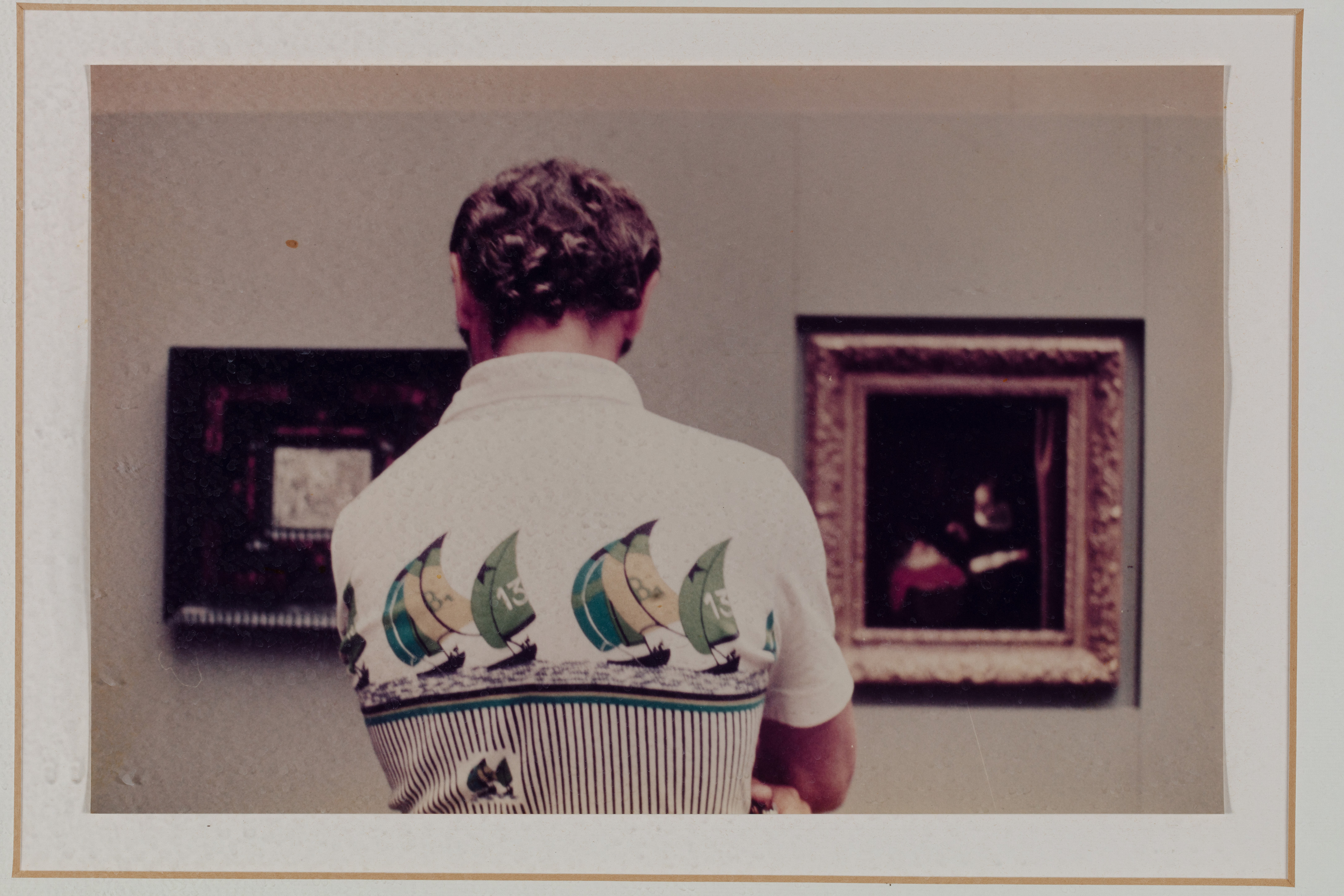
  • Luigi Ghirri
    Amsterdam, 1973, dalla serie “Diaframma 11 /125, luce naturale”, 1973
    Chromogenic print from negative 24 x 36 mm / Stampa cromogenica da negativo 24 x 36 mm / Chromogener Abzug vom Negativ 24 x 36 mm
    7 1/8 x 11 in
    18 x 28 cm
  • What does it mean to experience an image through a screen? A vast and complicated subject of reflection, impossible to...
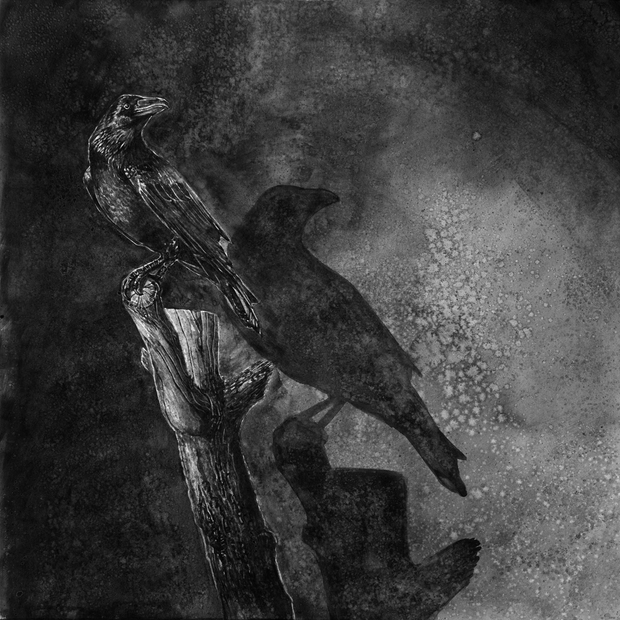
    Hans Op de Beeck
    In Silent Conversation with Correggio - Nocturnal Sea, 2009
    Acquerello su carta Arches
    52 7/8 x 96 3/8 x 23 5/8 in
    134.4 x 244.7 x 60 cm
    What does it mean to experience an image through a screen? A vast and complicated subject of reflection, impossible to address fully here, but I believe it is interesting to use this lens to read these works. I will not recount their history; I am not an art historian, and my artistic practice does not deal with painting. At the same time, I am deeply implicated in everything that looking means. As Berger again says, looking is also a political question. And in this era it is increasingly so.
     
    In 1972 the BBC broadcast the television series Ways of Seeing by John Berger (directed by Mike Dibb) and the author published its text (in Italy translated by Maria Nadotti), offering a powerful methodological guide for approaching the study of images. The work took the baton from Walter Benjamin’s famous essay The Work of Art in the Age of Mechanical Reproduction. It updated themes that have now exploded in contemporary times: the dynamics of power, gender, domination, and freedom within images are reread critically and questioned by the author. “The art of the past as a whole has become a political issue,” writes Berger, “the art of the past no longer exists in the forms in which it once existed. Its authority has been lost. In its place there is the language of images.” And it is truer than ever that “what matters is who now uses this language and for what purposes.”
    The gaze is never neutral; it is influenced by our history, our background, the codes we have been taught, and the prejudices that follow—both aesthetic and moral.
    In this sequence I have included two images of animals. Animal gazes add another level of reflection: we who look at the animal, through the artist’s gaze, the animal that looks… but what exactly do we see? What can we imagine the crow perched on a branch in a barely illuminated darkness is looking at? What does its shadow look at? How deep can a shadow be?
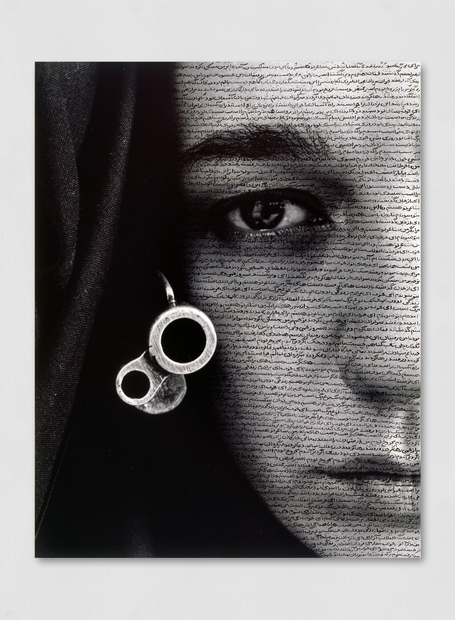
  • What do I see when I look at the young woman with the exhausted, deeply sad gaze, and the barrel...
    Shirin Neshat
    Speechless (Women of Allah series), 1996
    Ink on silver gelatin print / stampa alla gelatina d'argento e inchiostro / Tinte auf Silbergelatineabzug
    63 1/4 x 45 7/8 in
    160.5 x 116.5 cm

    What do I see when I look at the young woman with the exhausted, deeply sad gaze, and the barrel of a gun emerging from the veil she wears? What does that fine calligraphy on her skin tell me, in a language I do not know? What does human skin carry written upon it? I am looking at a woman who looks elsewhere; the barrel of the gun touches the skin and the writing — a written and tattooed testimony that calls me to attention. There are things I cannot see, even if the image is clear. In the end, I feel it as a lesson.

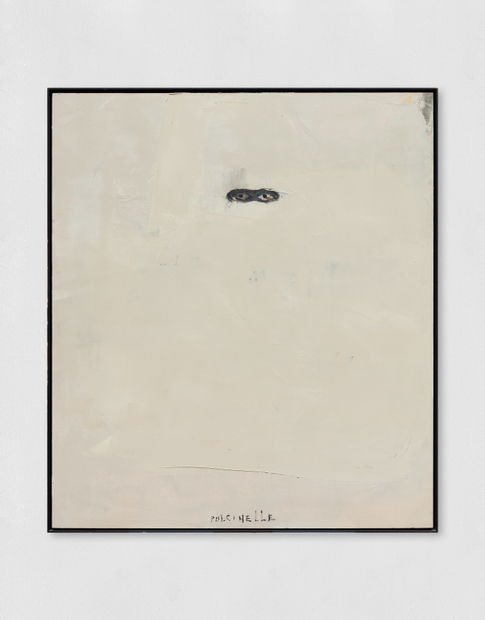
  • Observing a painting means imagining and confronting a map, searching for the cardinal points in order to navigate it. At...
    Piero Pizzi Cannella
    Pulcinelle (Bella Coppia. Pulcinelle), 2003
    Oil on board / Olio su tavola / Öl auf Karton
    64 1/8 x 56 1/2 x 2 1/8 in
    163 x 143.5 x 5.5 cm

    Observing a painting means imagining and confronting a map, searching for the cardinal points in order to navigate it. At times one encounters moments that create intimacy; at times one seeks to be seen, to be recognized.
    A floating mask of a Pulcinella, its body invisible. These masked eyes surface on an empty canvas; they begin to gaze into the light everywhere around them, seeing in order to exist, still trying to look at the world with no certainty of perceiving it, continuing relentlessly, fulfilling the light.

  • Sometimes it may be a woman’s face that appears — a face almost transparent in its faintly sketched colours, and...
    Antonio Donghi
    Ritratto di ragazza
    Oil and tempera on plywood / Olio e tempera su compensato / Öl und Tempera auf Sperrholz
    14 1/8 x 10 1/4 in
    36 x 26 cm

    Sometimes it may be a woman’s face that appears — a face almost transparent in its faintly sketched colours, and something subdued along the tear that is slipping toward the ground from one of her eyes.

  • In looking, the enigma of meaning radiates; narration ignites as an attempt to anchor one’s own existence within the time...
    Felice Casorati
    Donna con manto o Ragazza seduta con coperta, 1935
    Oil on cardboard / Olio su cartone / Öl auf Karton
    30 1/4 x 23 5/8 in
    77 x 60 cm

    In looking, the enigma of meaning radiates; narration ignites as an attempt to anchor one’s own existence within the time of the image. A woman wrapped in a blanket that functions like a supporting architecture: it holds her probably naked body as she looks sideways, with swollen eyes, perhaps on the verge of saying something. Here too, a gaze turned elsewhere — so as not to forget what we do not see, so as not to forget that even when we look with utmost attention, not all of the world allows itself to be seen.

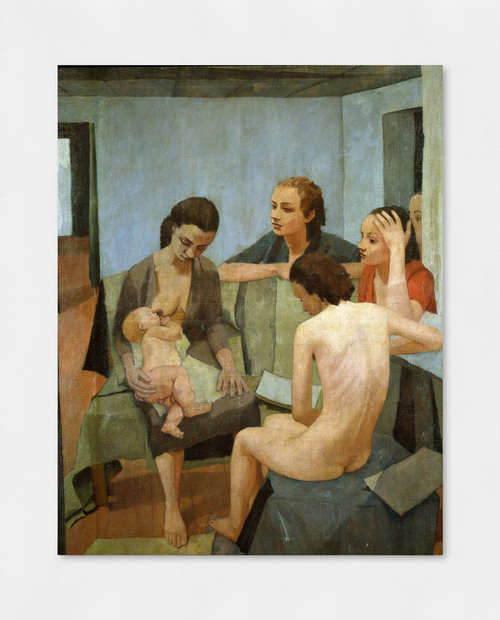
  • I want to say it clearly: Casorati offers an extraordinary faith in the act of looking. He nurtures this faith...
    Felice Casorati
    Le sorelle Pontorno, 1937
    Oil on canvas / Olio su tela / Öl auf Leinwand
    63 3/4 x 50 3/4 in
    162 x 129 cm

    I want to say it clearly: Casorati offers an extraordinary faith in the act of looking. He nurtures this faith in the Renaissance, in a hope for order and for the quiet clarity of knowledge — for a way of understanding that proceeds according to human measure… and he renews this faith at the moment of the great transformations at the dawn of the 20th century.
    And so, the gaze within this gathering of young women must move, must rotate clockwise from the child’s body, and even earlier, from the sheet/letter he holds in his lap. These are clothed bodies, naked bodies, blank pages. Their gazes intersect with ours, we who stand as external observers, in a perspective without a single vanishing point. They cross the room, exiting and re‑entering through the doorways.

  • The gaze follows the trajectories set in motion by the painter: style is a continent, or an alphabet that can...
    Agostino Carracci
    Giuditta con la testa di Oloferne, 1580 circa
    Oil on canvas / Olio su tela / Öl auf Leinwand
    43 1/4 x 33 1/2 in
    110 x 85 cm

    The gaze follows the trajectories set in motion by the painter: style is a continent, or an alphabet that can become a lexicon; it must be read, and every word is a discovery, or an invention — unexpected and full of wonder.
    The observation of a painting must be learned; one should pretend, each time, that one has never seen anything before, and thus manage to practise the new alphabet: Judith, seemingly devoid of emotion, her gaze far from what her hand has just done, does not invite the viewer in; nor does she seem aware of the body — the head with the open mouth just fallen onto the table, the head she has just severed.

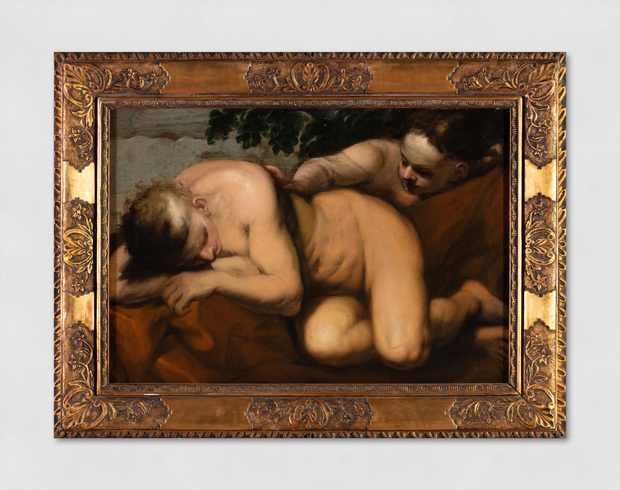
  • To recognize one’s own era in the nuances of an ancient light, painted almost five centuries earlier. The sleeping body...
    Antonio Carneo
    Menade addormentata, c.1650-1700
    Oil on canvas / Olio su tela / Öl auf Leinwand
    25 3/4 x 36 3/4 in
    65.4 x 93.5 cm
    To recognize one’s own era in the nuances of an ancient light, painted almost five centuries earlier.
    The sleeping body of the Maenad.
     
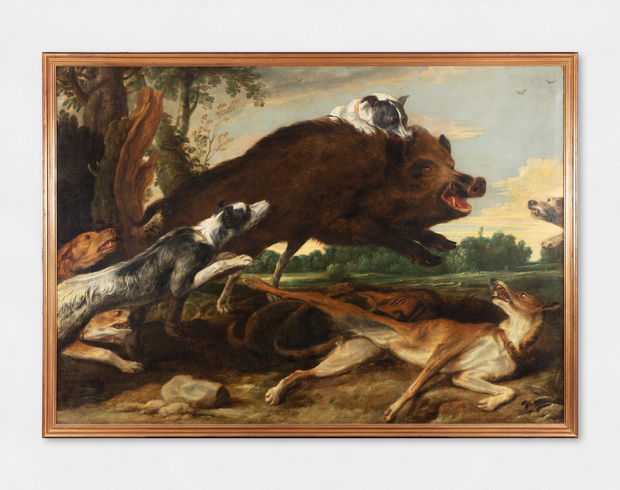
  • In looking, we discover something about ourselves. Even when observing the terrified eye of the hunted boar fleeing for its...
    Giovanni Crivelli
    Caccia al cinghiale
    Oil on canvas / Olio su tela / Öl auf Leinwand
    65 3/8 x 92 1/2 in
    166 x 235 cm

    In looking, we discover something about ourselves.

    Even when observing the terrified eye of the hunted boar fleeing for its life? What do we recognize in that animal eye? How painful can the bite sinking into flesh be, and the fear of what is about to end?

  • I would like to close with Berger’s words, again from Ways of Seeing:
     
    “The originals — the works — are mute and motionless in a way that is entirely foreign to information, where information is never mute or still. From this point of view, the reproduction hanging on a wall has nothing to do with the work itself. In the original, silence and stillness permeate the very substance, the colour, in which we follow the traces of the painter’s sudden gestures. The result is that the temporal distance between the making of the painting and our looking at it is reduced. In this very particular sense, all paintings are contemporary. Hence the immediacy of their testimony. Their historical instantaneity stands literally before our eyes. Cézanne made a similar remark, from the painter’s point of view: ‘A minute in the world’s life passes! To paint it in its reality, and to forget all else for its sake! To become that minute, to be the sensitive plate… to give the image of what we see…’ What we do with that painted instant when we have it before our eyes depends on what we expect from art, which today in turn depends on how we have already experienced the meaning of paintings through their reproduction.”
  • Claudia Losi Born in Piacenza in 1971, Claudia Losi studied at the Academy of Fine Arts in Bologna, where she...

    Claudia Losi 

    Born in Piacenza in 1971, Claudia Losi studied at the Academy of Fine Arts in Bologna, where she also earned a degree in Foreign Languages and Literature.

    Her artistic research explores the relationship between human beings and nature. Travel, walking, and exploration are investigated as forms of knowledge through which she establishes a direct relationship with places, interweaving disciplines such as natural sciences, ethnology, geology, geography, cartography, literature, and poetry.

  • Works
    • Photograph taken in Amsterdam in 1973
      Luigi Ghirri, Amsterdam, 1973, dalla serie “Diaframma 11 /125, luce naturale”, 1973
    • Hans Op de Beeck, In Silent Conversation with Correggio - Nocturnal Sea, 2009
      Hans Op de Beeck, In Silent Conversation with Correggio - Nocturnal Sea, 2009
    • A Ink on silver gelatin print of a woman’s face alongside the barrel of a gun and inscribed across the surface were the words from a poem written by Tahereh Saffarzadeh.
      Shirin Neshat, Speechless (Women of Allah series), 1996
    • An oil painting with a pair of eyes protruding through the cream paint.
      Piero Pizzi Cannella, Pulcinelle (Bella Coppia. Pulcinelle), 2003
    • An oil painting of a portrait of a girl. A simplified flat image of a girl in green and white on a blue background with a green headscarf.
      Antonio Donghi, Ritratto di ragazza
    • An oil painting of a woman sat in a chair wrapped in a green blanket.
      Felice Casorati, Donna con manto o Ragazza seduta con coperta, 1935
    • An oil painting of the Pontorno sisters. In a relaxed domestic environment, one is breastfeeding a child while another sits in the nude.
      Felice Casorati, Le sorelle Pontorno, 1937
    • Agostino Carracci, Giuditta con la testa di Oloferne, 1580 circa
      Agostino Carracci, Giuditta con la testa di Oloferne, 1580 circa
    • An oil painting of a sleeping menade. In Greek mythology, maenads were the female followers of Dionysus. One figure lays sleeping while another leans over, placing a hand on their shoulder.
      Antonio Carneo, Menade addormentata, c.1650-1700
    • Painting depicting boar hunting
      Giovanni Crivelli, Caccia al cinghiale
Back to exhibitions

UniCredit Art Collection Logo.

  • UniCredit Art Collection
  • UniCredit Website

Terms of Use


For referrals, loan requests and other projects                                                                                                   

WRITE TO US

Instagram, opens in a new tab.
LinkedIn, opens in a new tab.
Youtube, opens in a new tab.
Twitter-x, opens in a new tab.
Privacy Policy
Accessibility policy
Cookie Policy
Manage cookies
Copyright © 2026 UniCredit Art Collection

This website uses cookies
This site uses cookies to help make it more useful to you. Find out more about cookies.

Manage cookies
Accept

Cookie preferences

Check the boxes for the cookie categories you allow our site to use

Cookie options
Required for the website to function and cannot be disabled.
Improve your experience on the website by storing choices you make about how it should function.
Allow us to collect anonymous usage data in order to improve the experience on our website.
Allow us to identify our visitors so that we can offer personalised, targeted marketing.
Save preferences
Close

Join our mailing list

Signup

* denotes required fields

In order to respond to your enquiry, we will process the personal data you have supplied in accordance with our privacy policy.