Time that “perhaps” unveils Truth: Online Exhibition curated by Stefano Cagol, contemporary artist exploring social themes such as identity and climate crisis
Current exhibition
-
The (presumed) certainty of finding an immediate answer to every question is what we consider one of the greatest luxuries of our age. Knowledge and speed seem to form an inseparable pair today. Everything appears fast and agile thanks to technological evolution. The idea of placing time in between is no longer contemplated, to the point that we are losing familiarity with our relationship to time. Art helps us not to forget that letting time flow, allowing time to act, is essential.Technological modernity, in its relentless progress, has imposed a new form of temporality: the time of performance. An accelerated continuum in which speed becomes synonymous with efficiency and, implicitly, with knowledge.However, as French philosopher Paul Virilio observes, every acceleration carries with it a loss of perceptual depth; the increase in speed does not expand knowledge but flattens it into the present, reducing the possibility of waiting, of sedimentation, of experience. Virilio’s dromology—a term coined by the philosopher to indicate, literally, the “science of speed”—reveals that every technical progress also contains its potential catastrophe, understood as the impossibility of thinking. In this scenario, art presents itself as a counter-device to the logic of immediacy. It reintroduces duration, suspension, and slowing down as acts of epistemological resistance.The artwork becomes a place where time is once again perceptible, tangible, dense—a dimension to inhabit.
“Nature is a great and refined rolled-up tapestry, which we cannot see all at once, but must be content to unroll gradually”
wrote Robert Boyle, contrasting experiments and direct observations with the ancient method based solely on deductive arguments.
-
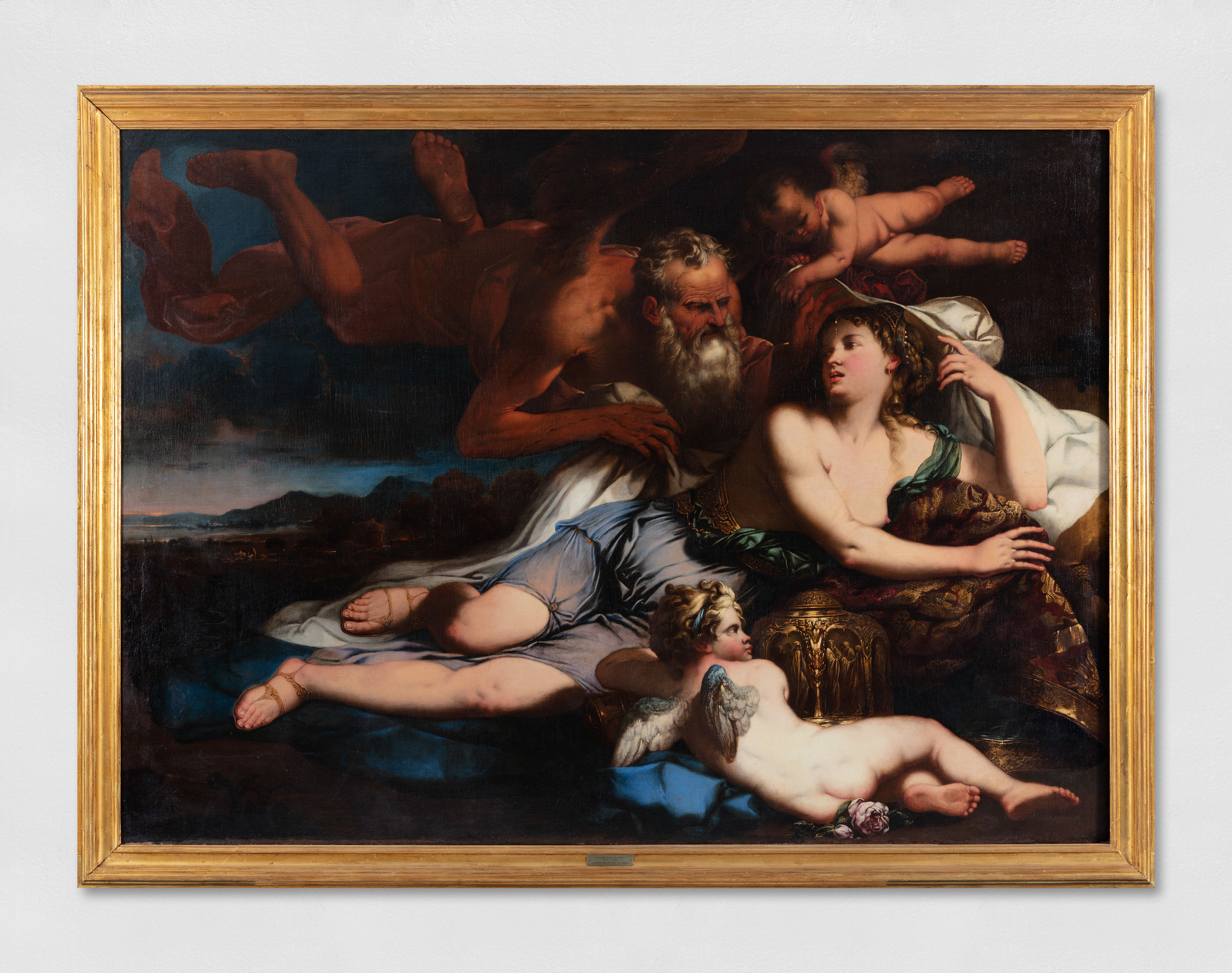
 Francesco RuschiIl Tempo che scopre la VeritàOil on canvas / Olio su tela / Öl auf Leinwand61 3/8 x 86 5/8 in
156 x 220 cm -
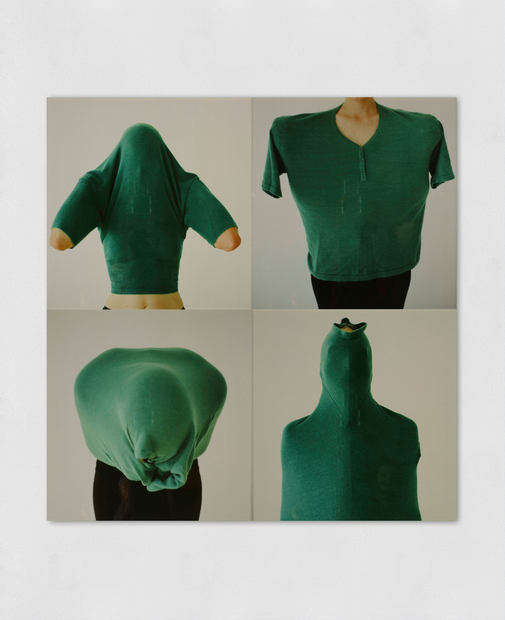
Erwin WurmOne Minute Sculptures, 1998Photography / Fotografia / Fotografie39 3/8 x 39 3/8 in
100 x 100 cm -
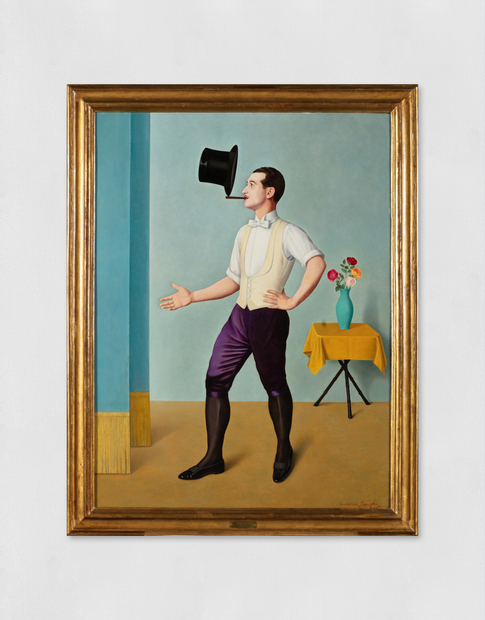
Antonio DonghiIl Giocoliere, 1936Oil on canvas / Olio su tela / Öl auf Leinwand45 5/8 x 34 in
116 x 86.5 cm -
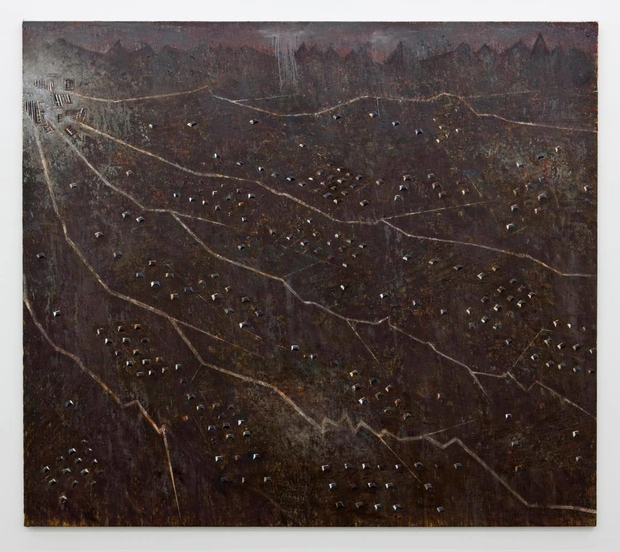
Armin BoehmLa Peste, 2010Oil, metal, pigment and aluminium on canvas / Olio, metallo, pigmento e alluminio su tela / Öl, Metall, Pigment und Aluminium auf Leinwand90 1/2 x 102 3/8 x 1 in
230 x 260 x 2.5 cm -
Jiang PengyiUnregistered city NO. 8, 2010Archival Lnkjet Print, edition 2/8 / Archival Lnkjet Print, edizione 2/8 / Archivial Lnkjet Print, Ausgabe 2/835 3/8 x 49 1/4 in
90 x 125 cm -
James CasebereBologna Tunnel # 4, JC-228.L.4, 2010Framed digital chromogenic mounted to Dibond, sample4/5 / Cromogenico digitale incorniciato e montato su Dibond, esemplare 4/5 / Gerahmtes digitales Chromogen, auf Dibond aufgezogen, Muster 4/574 x 91 x 2 3/4 in
188 x 231 x 7 cm -
Francesco JodiceTrento, 2009Photography Digital Print, wood frame, plexiglas, aluminium / Fotografia Digital Print, wood frame, plexiglas, aluminium / Digitaler Fotodruck, Holzrahmen, Plexiglas, Aluminium, Ed. 1/8104 3/8 x 72 7/8 x 2 3/4 in
265 x 185 x 7 cm -
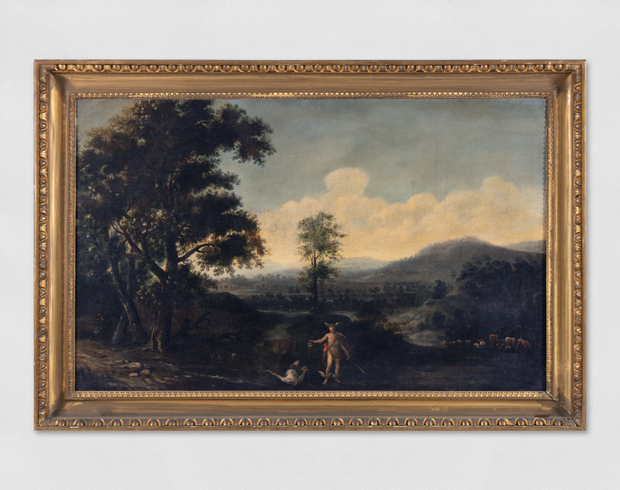
Herman Van SwaneveltPaesaggio con Mercurio ed ArgoOil on canvas / Olio su tela / Öl auf Leinwand35 7/8 x 57 1/2 in
91 x 146 cm -
In this horizon, “perhaps” does not weaken the search for truth—it saves it.It is the contemporary form of epistemic humility, the recognition that human knowledge is always partial, immersed in becoming.Only through this “perhaps” can we still hope that time—in its flowing and returning—continues, stubbornly, to unveil truth.
-
-
-
Francesco Ruschi, Il Tempo che scopre la Verità
-
Erwin Wurm, One Minute Sculptures, 1998
-
Antonio Donghi, Il Giocoliere, 1936
-
Armin Boehm, La Peste, 2010
-
Jiang Pengyi, Unregistered city NO. 8, 2010
-
James Casebere, Bologna Tunnel # 4, JC-228.L.4, 2010
-
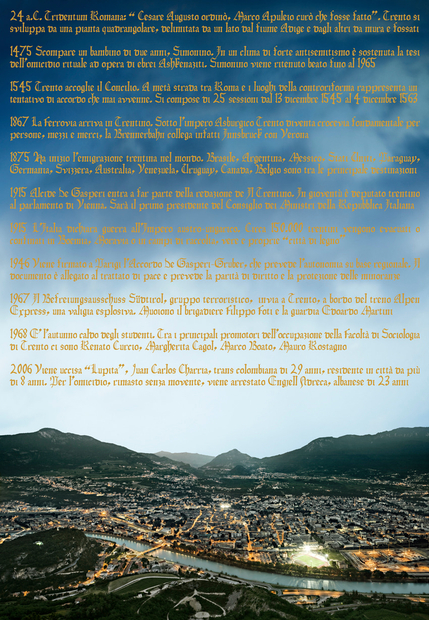
Francesco Jodice, Trento, 2009
-
Herman Van Swanevelt, Paesaggio con Mercurio ed Argo
-